1
/
of
1
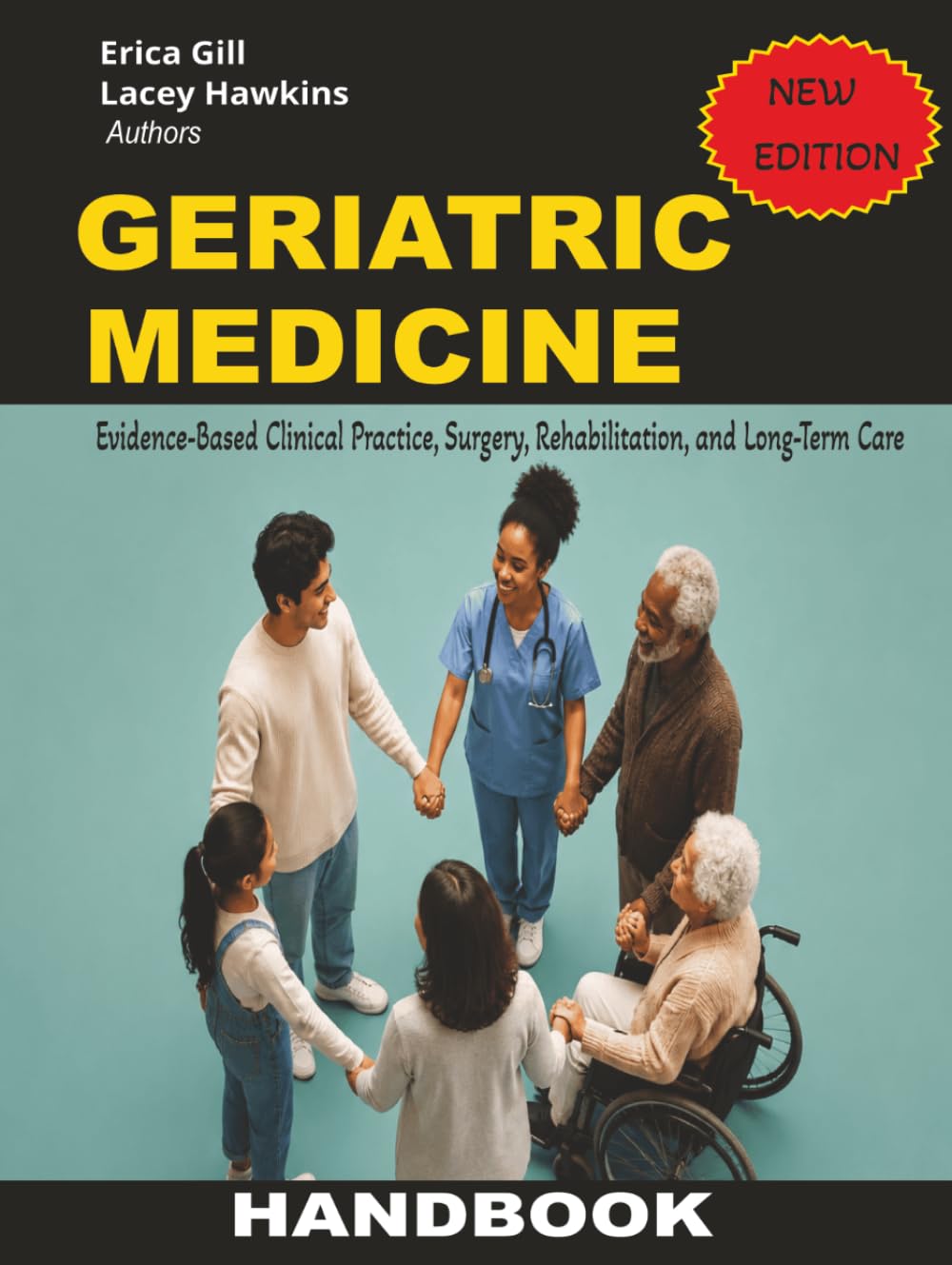
Geriatric Medicine: Evidence-Based Clinical Practice, Surgery, Rehabilitation, and Long-Term Care (Geriatric Medicine Volume 1-4) (Ebook)
Geriatric Medicine: Evidence-Based Clinical Practice, Surgery, Rehabilitation, and Long-Term Care (Geriatric Medicine Volume 1-4) (Ebook)
Regular price
$110.00 USD
Regular price
$140.56 USD
Sale price
$110.00 USD
Unit price
/
per
Shipping (US): Free economy shipping on orders $20+
Couldn't load pickup availability
✅ 100% Satisfaction Guarantee
As populations continue to age worldwide, healthcare professionals face increasingly complex challenges involving multimorbidity, frailty, cognitive impairment, polypharmacy, functional decline, rehabilitation, long-term care, and end-of-life decision-making. Geriatric Medicine Handbook provides a comprehensive, evidence-informed resource designed to support clinicians, trainees, caregivers, and healthcare professionals in delivering high-quality, person-centered care to older adults.
This practical handbook emphasizes the core principles of modern geriatric medicine: preserving function, maintaining independence, improving quality of life, optimizing safety, and aligning medical care with the values and goals of each individual. Rather than focusing solely on diseases, the book addresses the broader clinical, functional, psychological, cognitive, social, and environmental factors that influence health outcomes in later life.
Readers will find a wealth of clinical tools, assessment frameworks, algorithms, case-based learning scenarios, practice checklists, and evidence-based protocols covering the most important topics in contemporary geriatric care. The handbook integrates traditional geriatric principles with emerging concepts in healthy aging, rehabilitation science, digital health, perioperative medicine, frailty assessment, caregiver support, and long-term care planning.
Inside This Handbook
Why Readers Will Value This Book
Geriatric Medicine Handbook combines evidence-based clinical guidance with practical tools that can be immediately applied in real-world settings. The book is structured to support rapid clinical decision-making while providing deeper educational content for ongoing learning and professional development.
Unlike traditional references that focus primarily on disease management, this handbook emphasizes function, independence, resilience, quality of life, and individualized care. It recognizes that successful aging requires attention not only to medical conditions but also to cognition, mobility, nutrition, social support, caregiver involvement, and patient preferences.
The result is a comprehensive resource that supports compassionate, holistic, and effective care across the entire continuum of aging.
This practical handbook emphasizes the core principles of modern geriatric medicine: preserving function, maintaining independence, improving quality of life, optimizing safety, and aligning medical care with the values and goals of each individual. Rather than focusing solely on diseases, the book addresses the broader clinical, functional, psychological, cognitive, social, and environmental factors that influence health outcomes in later life.
Readers will find a wealth of clinical tools, assessment frameworks, algorithms, case-based learning scenarios, practice checklists, and evidence-based protocols covering the most important topics in contemporary geriatric care. The handbook integrates traditional geriatric principles with emerging concepts in healthy aging, rehabilitation science, digital health, perioperative medicine, frailty assessment, caregiver support, and long-term care planning.
Inside This Handbook
- Comprehensive Geriatric Assessment
- Frailty and Functional Aging
- Falls Prevention and Mobility
- Medication Management
- Cognitive Health and Dementia Care
- Nutrition and Exercise
- Surgical and Perioperative Care
- Long-Term Care and Advanced Care Planning
- Case-Based Learning
Why Readers Will Value This Book
Geriatric Medicine Handbook combines evidence-based clinical guidance with practical tools that can be immediately applied in real-world settings. The book is structured to support rapid clinical decision-making while providing deeper educational content for ongoing learning and professional development.
Unlike traditional references that focus primarily on disease management, this handbook emphasizes function, independence, resilience, quality of life, and individualized care. It recognizes that successful aging requires attention not only to medical conditions but also to cognition, mobility, nutrition, social support, caregiver involvement, and patient preferences.
The result is a comprehensive resource that supports compassionate, holistic, and effective care across the entire continuum of aging.
Share