1
/
of
1
Encyclopedia of Health Promotion and Primary Prevention: An Encyclopedic Resource for Preventing Disease and Advancing Wellness (Ebook)
Encyclopedia of Health Promotion and Primary Prevention: An Encyclopedic Resource for Preventing Disease and Advancing Wellness (Ebook)
Regular price
$110.00 USD
Regular price
$0.00 USD
Sale price
$110.00 USD
Unit price
/
per
Shipping (US): Free economy shipping on orders $20+
Couldn't load pickup availability
✅ 100% Satisfaction Guarantee
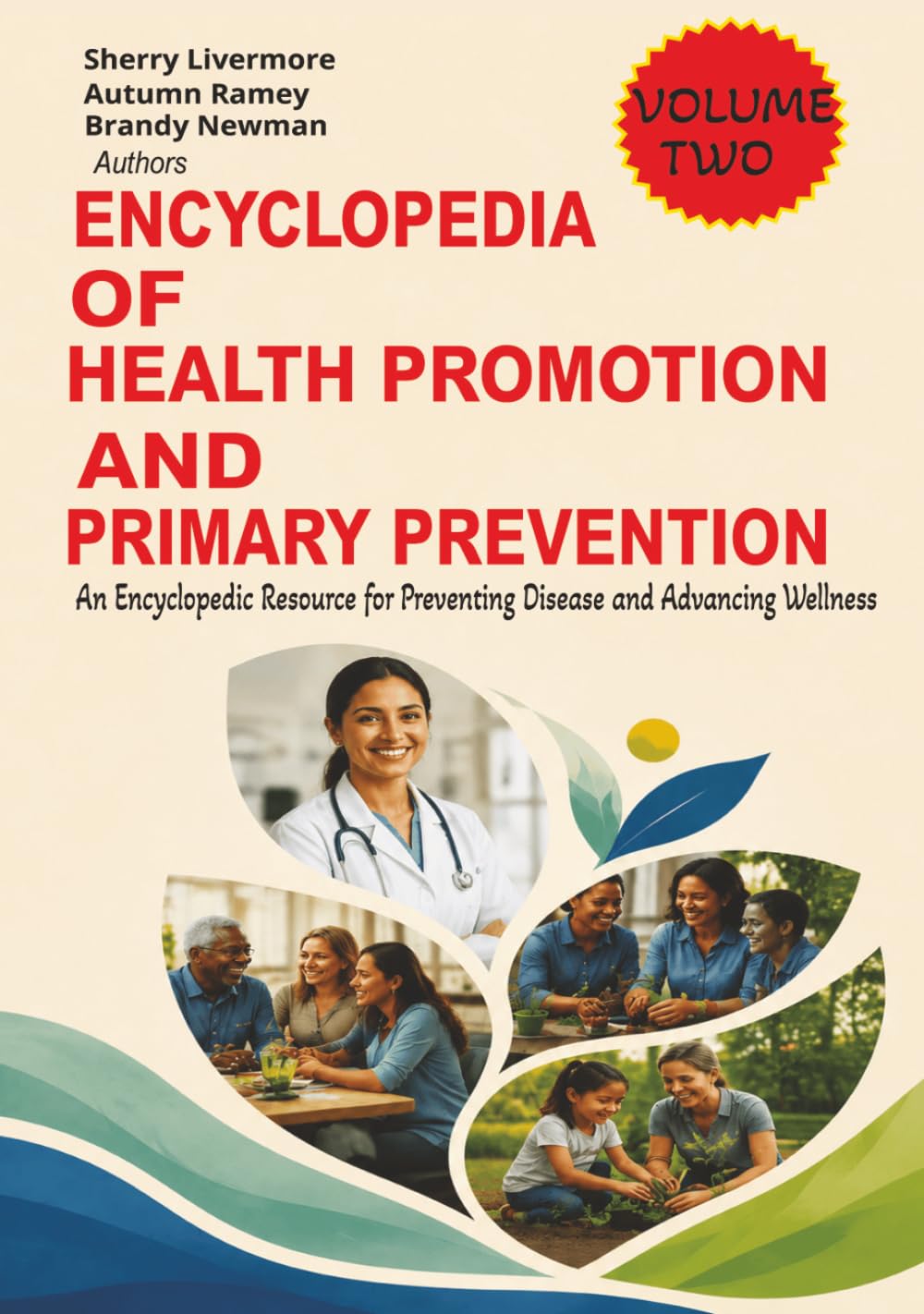
VOLUME TWO
Master the science and practice of evaluating health promotion programs with clarity, confidence, and real-world precision.
Health Promotion and Program Evaluation: Methods, Frameworks, and Real-World Application is a comprehensive, practitioner-focused guide designed for students, public health professionals, researchers, and policymakers who want to move beyond theory into actionable evaluation practice.
This book breaks down complex evaluation science into structured, easy-to-follow frameworks that can be applied in real community, clinical, and policy settings where uncertainty, limited resources, and competing priorities are the norm.
Inside, you’ll discover how to design, implement, and interpret evaluations that actually inform decisions and improve health outcomes.
What You’ll Learn Inside
Why This Book Stands Out
Unlike purely theoretical textbooks, this guide focuses on how evaluation is actually done in practice. It shows how to adapt rigorous methods to real-world constraints, limited budgets, imperfect data, ethical challenges, and complex community systems.
It also emphasizes a critical but often overlooked truth: a good evaluation is not the most complex design, it is the one that produces usable, decision-ready evidence.
Perfect For
Master the science and practice of evaluating health promotion programs with clarity, confidence, and real-world precision.
Health Promotion and Program Evaluation: Methods, Frameworks, and Real-World Application is a comprehensive, practitioner-focused guide designed for students, public health professionals, researchers, and policymakers who want to move beyond theory into actionable evaluation practice.
This book breaks down complex evaluation science into structured, easy-to-follow frameworks that can be applied in real community, clinical, and policy settings where uncertainty, limited resources, and competing priorities are the norm.
Inside, you’ll discover how to design, implement, and interpret evaluations that actually inform decisions and improve health outcomes.
What You’ll Learn Inside
- How to build and use logic models and theories of change to map programs from inputs to long-term health outcomes
- How to distinguish and apply formative, process, impact, and outcome evaluation in real settings
- Practical guidance on selecting experimental, quasi-experimental, and non-experimental designs based on feasibility and rigor
- How to identify and manage confounding, external factors, and bias in real-world evaluations
- Step-by-step development of a complete evaluation plan, including indicators, data sources, timelines, and analysis strategies
- How to apply major frameworks such as the CDC Program Evaluation Framework, RE-AIM, and PRECEDE–PROCEED
- A clear introduction to both quantitative and qualitative evaluation methods, including when and how to use each
- Survey design principles that improve accuracy, reduce bias, and strengthen validity in health research
- Techniques for focus groups, interviews, observation, and document analysis to understand program experiences and context
- Ethical foundations of evaluation, including informed consent, confidentiality, justice, and community respect
- Real-world case examples that demonstrate how evaluation is conducted in resource-limited and community-based settings
Why This Book Stands Out
Unlike purely theoretical textbooks, this guide focuses on how evaluation is actually done in practice. It shows how to adapt rigorous methods to real-world constraints, limited budgets, imperfect data, ethical challenges, and complex community systems.
It also emphasizes a critical but often overlooked truth: a good evaluation is not the most complex design, it is the one that produces usable, decision-ready evidence.
Perfect For
- Public health and health promotion students
- Program evaluators and research assistants
- NGO and community health workers
- Policy analysts and government health departments
- Researchers designing real-world intervention studies
Share